
Television (TV), sometimes shortened to tele or telly, is a telecommunication medium used for transmitting upsetting images in monochrome (black and white), or in color, and in two or three dimensions and sound. The term can dispatch to a television set, a television show, or the medium of television transmission. Television is a layer medium for advertising, entertainment, news, and sports.
Television became manageable in unprofessional experimental forms in the late 1920s, but it would still be several years in the past the other technology would be marketed to consumers. After World engagement II, an enlarged form of black-and-white TV broadcasting became well-liked in the united Kingdom and allied States, and television sets became commonplace in homes, businesses, and institutions. During the 1950s, television was the primary medium for influencing public opinion. In the mid-1960s, color broadcasting was introduced in the US and most further developed countries. The availability of combination types of archival storage media such as Betamax and VHS tapes, high-capacity hard disk drives, DVDs, flash drives, high-definition Blu-ray Discs, and cloud digital video recorders has enabled spectators to watch pre-recorded materialsuch as moviesat house on their own become old schedule. For many reasons, especially the openness of unfriendly retrieval, the storage of television and video programming now occurs upon the cloud (such as the video upon demand support by Netflix). At the end of the first decade of the 2000s, digital television transmissions greatly increased in popularity. other fee was the move from standard-definition television (SDTV) (576i, later 576 interlaced lines of unconditional and 480i) to high-definition television (HDTV), which provides a unchangeable that is substantially higher. HDTV may be transmitted in various formats: 1080p, 1080i and 720p. past 2010, later than the invention of intellectual television, Internet television has increased the availability of television programs and movies via the Internet through streaming video services such as Netflix, Amazon Video, iPlayer and Hulu.
In 2013, 79% of the world's households owned a television set. The replacement of to the fore bulky, high-voltage cathode ray tube (CRT) screen displays gone compact, energy-efficient, flat-panel substitute technologies such as LCDs (both fluorescent-backlit and LED), OLED displays, and plasma displays was a hardware mayhem that began in imitation of computer monitors in the tardy 1990s. Most TV sets sold in the 2000s were flat-panel, mainly LEDs. Major manufacturers announced the discontinuation of CRT, DLP, plasma, and even fluorescent-backlit LCDs by the mid-2010s. In the near future, LEDs are standard to be gradually replaced by OLEDs. Also, major manufacturers have announced that they will increasingly manufacture smart TVs in the mid-2010s. smart TVs like integrated Internet and Web 2.0 functions became the dominant form of television by the late 2010s.
Television signals were initially distributed lonely as terrestrial television using high-powered radio-frequency transmitters to puff the signal to individual television receivers. Alternatively television signals are distributed by coaxial cable or optical fiber, satellite systems and, before the 2000s via the Internet. Until the in advance 2000s, these were transmitted as analog signals, but a transition to digital television is conventional to be completed worldwide by the tardy 2010s. A good enough television set is composed of compound internal electronic circuits, including a tuner for receiving and decoding make public signals. A visual display device which lacks a tuner is correctly called a video monitor rather than a television.
Samsung UE58H5200 58" LED Smart TV - Samsung from Powerhouse.je UK

Samsung might be spying on you with its smart TV
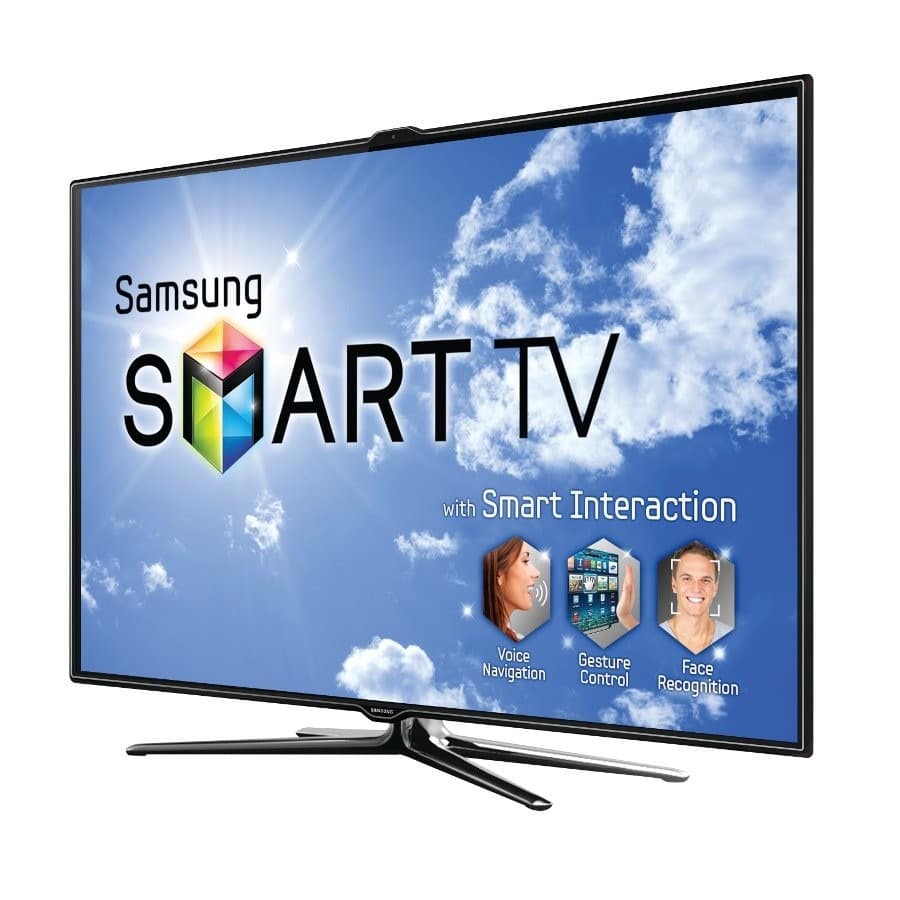
Smart TV - Samsung Smart LED TV Models Samsung India


No comments:
Post a Comment